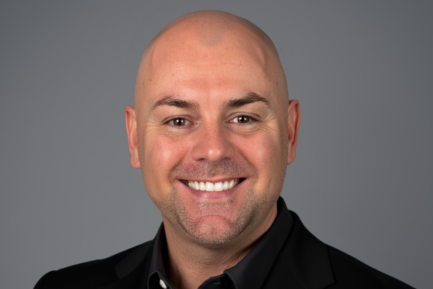

We sat down with Mike Gallegos, SIG’s new Executive Managing Director, to talk about his leadership style, what excites him about the Western Region, and how successful teams lead with culture.
Q: What drew you to SIG?
A: SIG allows me to take my unique strengths and talents and apply them in a place where there’s a receptive audience of brokers with intellectual curiosity and a real willingness to learn. When all of that comes together, it creates a system win. I can see the brokers are engaged, and there’s continuity, which makes it feel authentic.
Q: You’ve extensively coached high performers in the industry. What are some key traits you’ve noticed among your most successful clients?
A: With diversification today, our clients have access to far more data than they did even 10 years ago. They can quickly pull together information, run sophisticated models on how the CRE industry is performing, and build their own financial models and research. Because of that, the starting point for conversations is much higher. You have to be able to explain how an investment is performing relative to other markets and where it should go from here. Brokers need data, but just as importantly, they need to know what to do with it so they can not only keep up with their clients but stay ahead as trusted experts.
One of the most interesting clients I’ve worked with once told me, ‘We already have plenty of data. What I need from your team is help spotting trends and patterns, identifying blind spots, and filling in the gaps so I can make better decisions faster than my competitors.’ That’s really the opportunity: going problem-finding together so we can troubleshoot and create an advantage.
Q: Can you share a framework or foundational piece of advice for brokers who are looking to level up?
A: Brokers typically show up looking for tactics and angles that help with prospecting. Second to that is the pitch itself. Within both of those, there are practical components where you can bend the probability in your favor and really showcase your expertise and mastery of your product type and market. That’s the most exciting part of the process, second only to the close. I focus on providing systems that support that. More often with larger clients, it’s about the strategy and tactical approach that helps you get those meetings in the first place, along with refining and evolving your strategy and continually fine-tuning your craft.”
“I’ve had coaches in every phase of my life, starting with sports at a young age. One of my earliest coaches was a professional pitching coach, and his approach was very holistic. The idea was that it’s a 24/7 mindset. How you do anything impacts how you do everything. Your sleep, rest, recovery, and how you fuel your body all play a role, whether it’s professionally or athletically. That level of strategy and planning comes from recognizing that preparation is constant and that the work doesn’t just happen in the moment.
Q: Where do you believe the greatest opportunities are in the next 12–18 months, and what challenges should teams be preparing to navigate?
A: When the COVID era abruptly entered our world, people’s underwriting models and investment assessments changed almost immediately. A lot had to shift. Since then, we’ve seen certain submarkets emerge with clearer sources of gains, especially now that interest rates have begun to soften across different product types. Those who were able to get ahead of those changes, particularly within the 1031 exchange timeline, are now in a strong position. Clients who held their assets long enough can redeploy that capital and scale their investments, and that activity tends to create opportunities that benefit smaller clients as well.
Q: How do you stay sharp – mentally, physically, professionally?
A: I’m always looking for something new to learn. I’m very achievement-oriented, so I tend to set my sights on a target, pursue the opportunities that get me there, and once I complete it, I’m already looking for the next one. I’m also a big fitness person, so I still spend a lot of time in the gym. And I try to keep balance in life too, whether that’s getting out of the office to the beach or heading out to Jackson Hole.
Q: Final thought – What’s one thing people are surprised to learn about you?
A: I’m still on the hunt for more. I’m getting my MBA at 47 because I want to keep learning and expanding my knowledge. And it doesn’t stop there. After that, I’ll keep going. For me, it’s really an endless pursuit to keep learning and growing.